Our newsletter this month comes from the inquisitive minds of Play:Disrupt’s Malcolm Hamilton and Amy Rose.
Are you asking too many questions?
As designers we are often led by curiosity. We want to know things and solve problems. As advocates of participation we want to hear from the public, we are interested in their views. Our work often starts in posing questions. And these questions help us to design our public engagement activities. However, before putting all of our questions on to participants, how about we take a pause? How a question is asked, and by whom, can unintentionally set the parameters, tone and format of the response. By asking questions directly, we rarely get satisfying engagement or meaningful insight. By asking too many questions, there is the possibility of jumping too heavily on the see-saw of power or disrupting opportunities for people to speak directly from their lived experience.
And yet, by leaving things totally open ended, we may lose focus, gather poor data or waste people’s time. Structures enable creativity. Participants need assurance that their voices will have impact. Our clients need assurance that they will get the answers they need. So, how do we create a productive balance between framing the issues, getting some answers, and leaving space for things to emerge from the process?
Den-vironments for dialogue
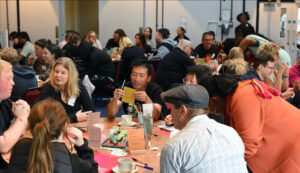
Play:Disrupt approaches engagement in terms of interactive spaces and activities. Participants benefit from what immersive theatre and games designers call a ’storying’ or narrative environment, in which the spatial set up, the objects and activities are carefully designed to address the purpose of the gathering. While these may appear oblique or tangential, there is method in our playfulness. We have found it useful to introduce novelty and intrigue to information gathering through the use of fictional frames; a game show format or a fictional awards ceremony, for example. We often see breakthroughs in thinking or improvement in the quality of the reflection and responses when we offer prompts for embodied activities that take people out of habitual thinking patterns and engage their imagination and creativity. When gathering information about young people’s experience of a place, we may offer games and quests, or invite play via play tools, such as fabrics or chalks placed within the location. Through these, participants experience the place in new ways, or bring focus to detail, alongside their existing knowledge of the place. Sometimes we invite people to create maps or models with small objects and loose parts, then listen closely as they describe what they’ve made and why. Opportunities for open story sharing help us to hear people’s experiences and concerns in new ways, all of which help us to answer the original questions, without ever posing them directly.
Answers Please?!
As far as finding answers, we try to stay as open as possible to any and all emerging themes. We process data collected from our engagement processes following mixed research methods that draw from grounded theory, thematic and narrative analysis. During this stage, we systematically examine and analyse what we have collected. We reflect on our original questions, yes, but also take interest in anything that falls outside of our pre-conceived lines of inquiry, opening up valuable avenues of discovery. While these may not be things that can be actioned in the project, it’s important for people to participate on their own terms.
There’s a big world needing fresh responses to long standing challenges, and all questions matter. So ask questions. Ask lots of them, there’s no better way to begin. But before bringing those questions to others, we need to remember that these are OUR questions. How might we agree with participants what information needs gathering and do so in fun, life-affirming ways? What poses a barrier to doing things differently or playfully? How can one’s own curiosity invite and respect others’ best thinking? Where is the room for their questions?
We’d love to hear how you work with your questions. Please let us know how you get on, or what has worked for you. As ever, let us know if we can help in any way.
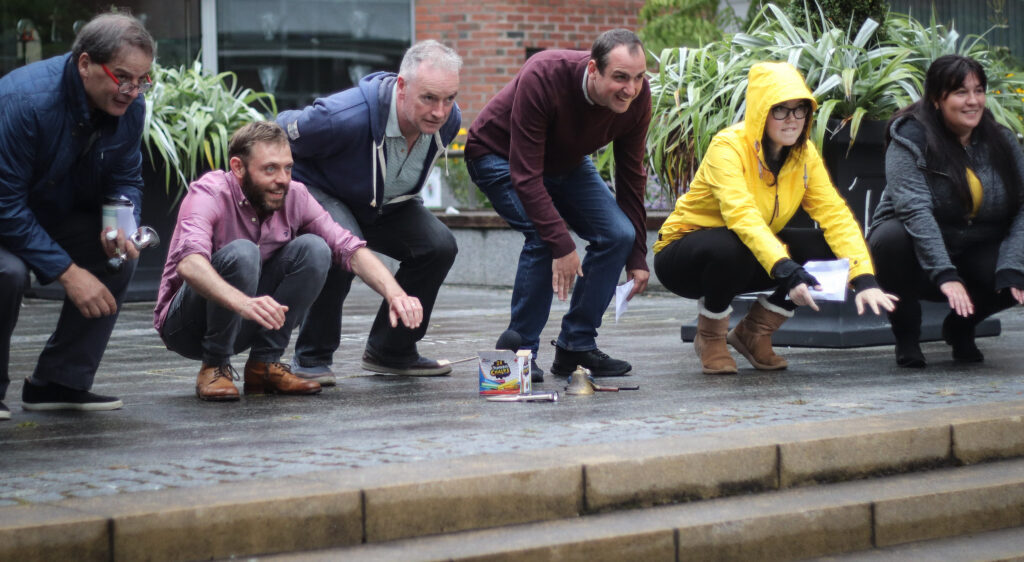
(photo Martin Nagle, The Civic Theatre. Malcolm, in pink, engages stakeholders in game exploring activation and possibilities for a public square)
Upcoming
Symbology workshops
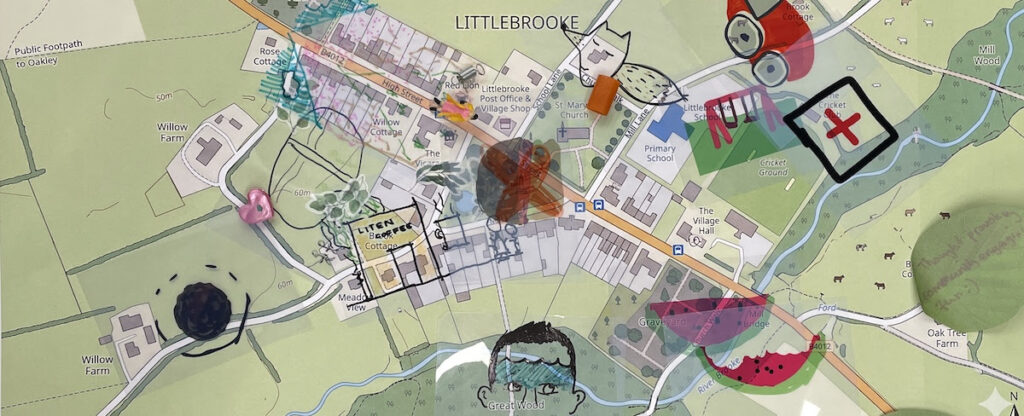
We will be running several workshops in July and August through Cardiff Child Friendly City using our award-winning approach to creating interactive map symbology with children and young people. If you live or work with children and young people Splott and Adamstown and want to get involved, please get in touch for more details.
Playful mapping with Public Map at The Cambridge Room
Sat 25th July, 11am-3pm
The Cambridge Room, Unit 55, The Grafton Centre (opposite Decathlon).
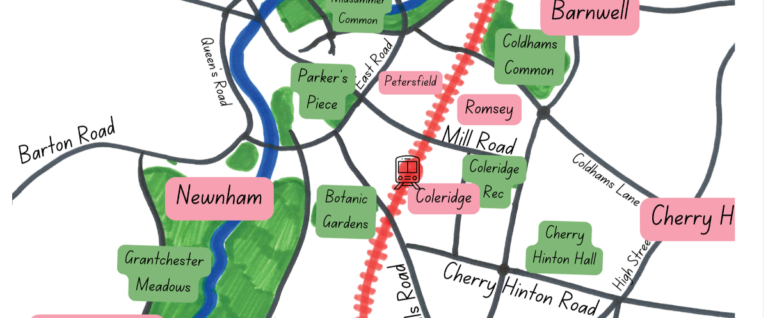
Play Disrupt and The Cambridge Room will host mapping activities that invite you to play, make, and share what different places in Cambridge mean to you. These are drop-in sessions; no booking required. All ages welcome.
|
Also on our radar
Laughing with friends; playful practices that improve quality of life
A recent study By Harvard, Baylor and Gallup collected data from 22 countries around the world about what makes life go well. They found that highest impact practice they measured was laughing with other students. This has huge implications about embedding play and playfulness into everyday life. There is great reporting on the study on LinkedIn from the National Institute for Play and others.
What is your Play Style?
Here’s a fun quiz , also from the National Institute for Play, that feeds into play style research and reflects on your own play style. Some have found it life changing. We enjoyed the playfulness of the prompts and the way that it identifies and celebrates differences, from having affinity with competitive games to being inclined to open-ended silly play. Have a go!
|