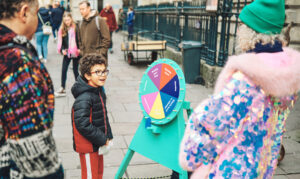
Our associate, Amy Rose, reflects on creating collective visions of the future.
A few years ago, I was invited to take part in an artist-led collaboration about imagining alternative futures. In response to the many social, environmental and political challenges of our time we were to co-create ‘sacred objects’ that expressed our hopes and ideas. The hired venue was a well-respected centre for environmental innovation and progressive thinking. So far, so good, right?…
Before attending, I called the lead artist to talk through my access needs, and how we might look after one another during the residency. The artist seemed perplexed, then affronted. They told me my needs were unrealistic, and suggested I consider therapy for anxiety. The conversation took an un-collaborative turn, and I made the swift decision not to attend.
The irony of this incident has stayed with me. Gathering people together for collective future-dreaming whilst simultaneously rejecting doing something different in order to make the space accessible, was absurd. This example aligns with questions that have long vexed many well-intentioned, change-
The importance of imagination has emerged as a hot topic (pardon the pun) among writers and activists, particularly in response to the climate emergency and global inequites. There is concern that moral, civic, and collective imagination is failing in the face of our metacrisis. But it is essential that we distinguish between imagination, as a fundamental function of a healthy brain, and the conditions under which imagination can flourish and have impact. I would say that the nub of the crisis lies in the conditions.
Often where civic imagination appears to have faded, it has, in fact been actively constrained. Discrimination, violence and fear can wreak havoc on the brain and body. Conditions of economic instability and scarcity, within the contexts of housing, jobs, services, and everyday goods, result in a strategic offloading of risk (and responsibility) from those in power, onto individuals, ensuring that attention is fixed on survival rather than possibility.
Bear in mind also, that imagination can also be mobilised in service of exclusion, othering and oppression. Imagination is at play when whole populations are demonised, or when history is distorted to condone use of force and whip up emotive narratives of us vs. them. We need to pay close attention to how ethics, power, privilege and narrative operate when imagination is evoked.
I absolutely believe in the role of imagination in catalysing change. However, moral imagination will falter if empathy is required but not reciprocated. Civic imagination cannot flourish if creativity and vision are invited, but agency is withheld. To avoid adding to the distrust communities may have of institutions, consultation needs to be sensitive to trauma and discrimination, and to meaningfully address how power is distributed.
At Play Disrupt, our work is deeply concerned with the imagination of all people; the capacity to envision that things could be other than they are, to make new connections between ideas, and elevate the expertise of lived experience. We engage with play partly because it can disrupt the conditions that limit imagination, at a human scale. Through play, people can momentarily step outside the roles of consumer, service user, stakeholder. People’s unique individuality and perspective find expression in play. We don’t always get it right, but we try to design opportunities for embodied, relational experimentation and open up different ways of encountering one another. These moments may not fully resolve structural injustice. But on a good day, they do refresh the imaginative ground on which collective action depends.
News
Play Disrupt welcomes Josephine Gyasi to the team!
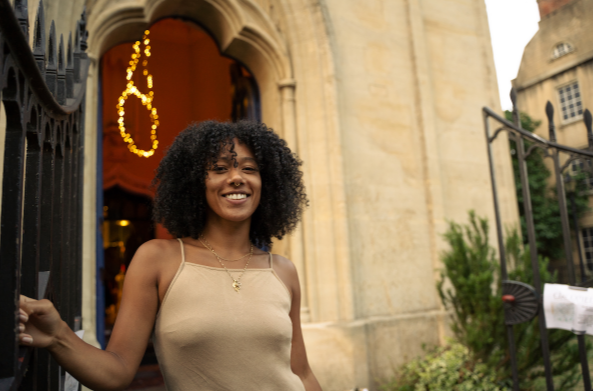
We’re so happy that our Josie Gyasi has formally joined the Play:Disrupt staff as creative engagement producer, after several years as an associate artist. Josie is an experienced facilitator and creative producer who centres joy, care and connection in her values-led, participatory projects. Past work includes Knowle West Media Centre, UWE, St. Paul’s Carnival and Black Girl Convention, among others. She creates safe, inclusive spaces that elevate the voices of marginalised communities. We value her infectious energy and glittering, systems-design mind. Please join us in welcoming Josie (but just don’t call her ‘Jo’)!
|