How play helps us cope: staying nimble in challenging times.
Our associate, Amy Rose reflects on the value of seasonal and everyday play.
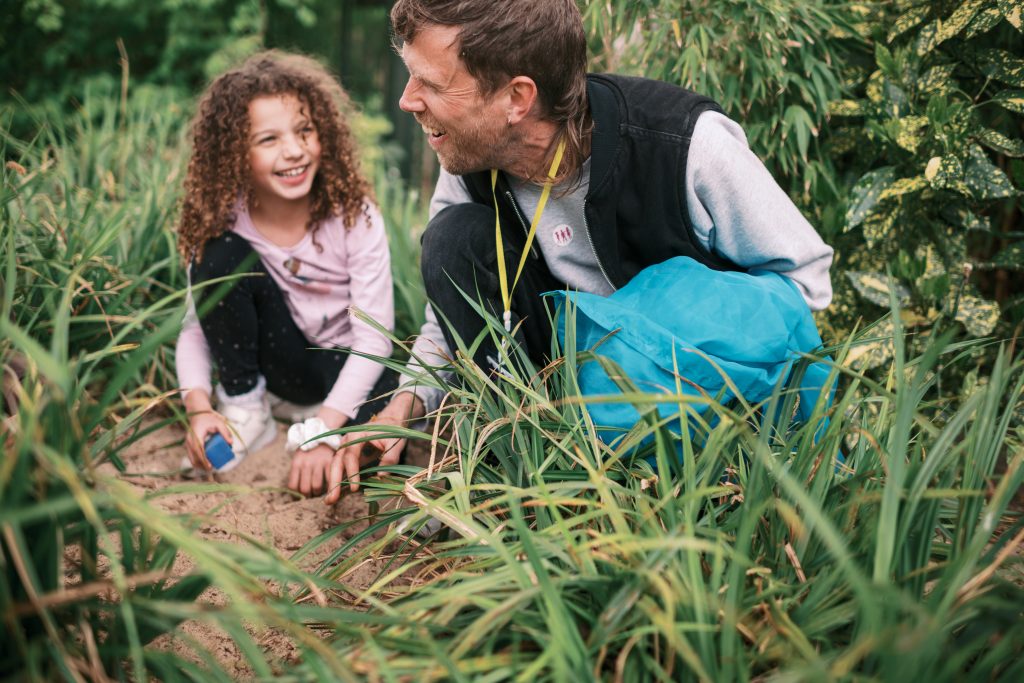
[Image credit: Chris O’Donovan – The Royal Parks]
Playfulness has been connected to increased creativity, emotional, social and intellectual intelligence, positive health and wellbeing outcomes and more. It builds the capacity to manage change, complexity and differences. If we consider that playfulness is a muscle, what are the seasonal and everyday conditions that can keep us nimble— and help us develop and sustain it?
Autumn invites play at all scales. Fun Palaces is an annual October event across the UK in which people are invited to host activities in their own communities. The brainchild of community theatre pioneer Joan Littlewood, and architect Cedric Price, it reminds us that playfulness and creativity is accessible to all, expressed in how we gather, and use our spaces and places. I notice that my Scrabble group starts to meet more regularly in autumn, and it’s easier to rustle friends and family for informal games as the nights draw in.
Overlooking it’s unfortunate consumerist appropriation, Halloween has its roots in the seasonal Celtic festival of Samhain, which plays on the threshold between light and dark, life and death, order and chaos. I love the way that this celebration playfully disrupts everyday norms. Dressing up enables us to explore alternative personas, and evokes the carnivalesque qualities of unrulyness and ‘reversal’; a sort of seasonal, pressure valve. Trick or treating rituals invite playful transgression across generations, quite literally on the threshold of public and private space.
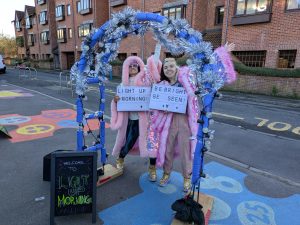
Working the play muscle increases resilience, too. I was recently moved by this expression of resistance that originated in Portland, Oregon, USA. Protestors use absurdist imagery as playful protest, in the form of inflatable costumes, in response to the federal government’s increasingly militant presence in the city. As larger than life frogs, dinosaurs, unicorns and more, protesters are contradicting unfounded narratives that characterise them as violent terrorists.
Closer to home Robyn Hambrook and Hilary Ramsden have been exploring an approach they call playful ambivalence, in their exploration of political clowning. During recent actions, protesters carried empty signs –no words or images at all–which had a dis-arming effect on police, and invited dialogue and curiosity,
in the absence of direct and potentially polarising messaging. Interventionist practices such as these, that use humour and theatricality have long been effective tools for political critique and action. The origins of Play Disrupt were in director Malcolm Hamilton’s exploration of the playful approaches of Ferguson’s Gang, a group of young women, whose actions ruffled some feathers while raising funds and awareness that questioned urban sprawl and protected many of the UK’s important natural and heritage sites from ruin in the 1930’s.
Playful acts, at whatever scale, are not simply a release valve or escape from work. They’re also a way of practicing and nurturing essential human qualities and rehearsing agency at individual and community level, helping us to respond adeptly to our circumstances. Who knows? Our play muscle may just be our most important one for creating a vibrant and equitable world. How will you exercise yours this month?
|