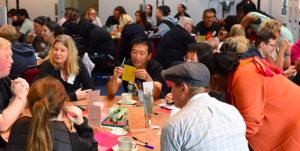
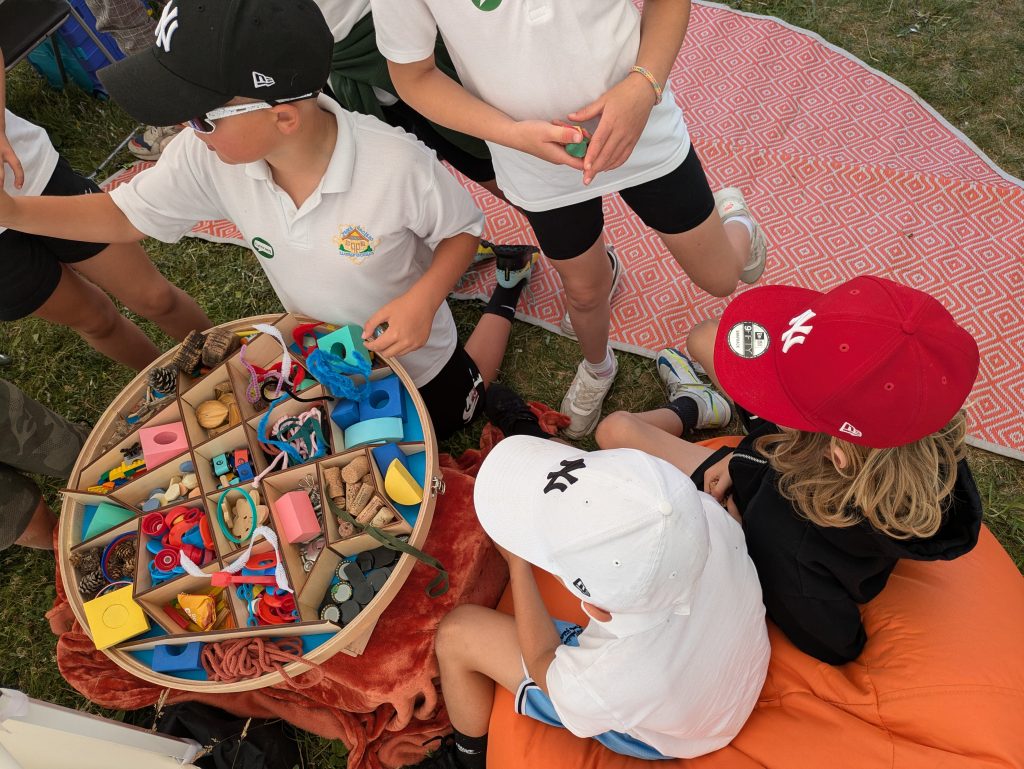
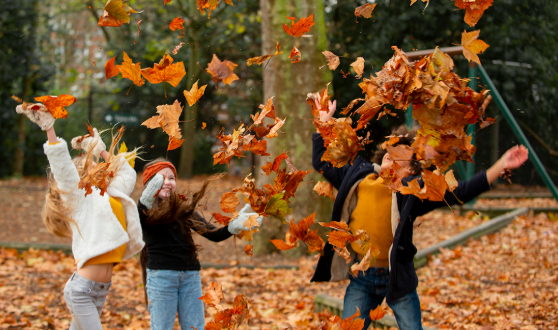
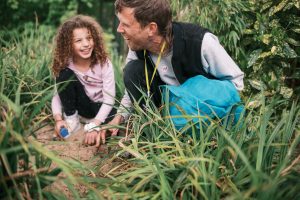
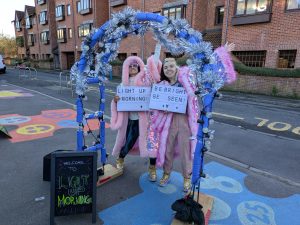
What are your earliest memories of being a citizen? Mine recall some of the rituals associated with growing up in 1970’s New England: pledging allegiance to the flag at the beginning of the school day, playing glockenspiel in the marching band for the Fourth of July parades (true fact!), attending anti-nuclear events, copying handmade election posters on the public library’s photocopier. These were no doubt civic acts. But digging a little deeper, there were informal, and possibly even more formative, experiences of citizenship that happened earlier, during play. In The Child in the City (1978), Colin Ward argued that children’s self-directed play is a powerful form of civic engagement—especially in urban spaces where they must navigate adult-designed systems. Through play, he said, children develop the capacity to challenge, adapt, and co-create the environments around them. These are not side skills. They lay the foundations of democratic participation. So the hours I spent negotiating the rules of a made-up game with neighbour kids, riding bikes, raking leaf piles (and jumping into them), dragging ‘treasures’ home from the town dump; these were embodied experiences of cooperation, resistance and improvisation. They were how we learned to inhabit space, respect differences, assert ideas and make decisions together. This lens offers a way to examine my current civic life. Still collaborative and messy; grounded in place, relationship and deliberation. It echoes what storyteller Baratunde Thurston and futurist Jon Alexander describe as citizening—not as something bestowed by a passport or ballot, but a daily practice of showing up and shaping the world around us. And that vision becomes more urgent in a time when citizenship—both as legal status and lived experience—is increasingly policed, withheld, and unequally distributed. We understand that both play, and civic participation, are facing challenges. Children’s time, space and permission to access to independent, outdoor play, has decreased significantly since I was a child, both in hours spent and geographical area (or home range). Meanwhile, the UK Community Life Survey, 2024, put the percentage of UK adults engaged in civic life at 33% in 2023/24, down from a 41% high during 2020. Perhaps these statistics demonstrate a shrinking of the commons, both physical and social. Indeed, in the face of overlapping crises—social, ecological, political, the spaces for collective agency often feel out of reach. But I still feel there are reasons to be hopeful. Campaigns like #Yes Ball Games (launched by Dennis Law Legacy Trust, Aberdeen Greenspace, Aberdeen Play Forum, Aberdeen City Council, Playing Out and others) are working to restore children’s freedoms and sense of belonging in their everyday spaces. The campaign has now expanded nationwide. Here in Bristol, Play Disrupt, comissioned by Trinity Community Arts, Citizens in Power and the West of England Mayoral Combined Authority, are applying playful, gamefied approaches that help to ask “What would culture and creativity look like in the West of England if they were for everyone?” A Citizen’s Assembly for Culture, made up of 52 delegates from across the city, selected through a randomised, representative process, will input into a plan for the city’s arts and culture, including budgeting, programming and more. (See more on this, below) We are committed to finding new (and old) ways to engage with civic life—not as consumers, subjects or spectators, but as co-creators. Maybe play is one of those ways. Maybe it always was and we’ve been citizening all along. The question now, is how we ensure that we—and our children—can keep practising this essential human activity? |